Small-batch production
Plan manageable quantities, pre-orders and a pace you can sustain. Include your time in your pricing and leave room for life outside the kitchen.
SMALL KITCHENS. BIG POSSIBILITIES.
A supported pathway for Melbourne’s home cooks to build safe, sustainable food businesses.
Phase One in development · Darebin & greater Melbourne
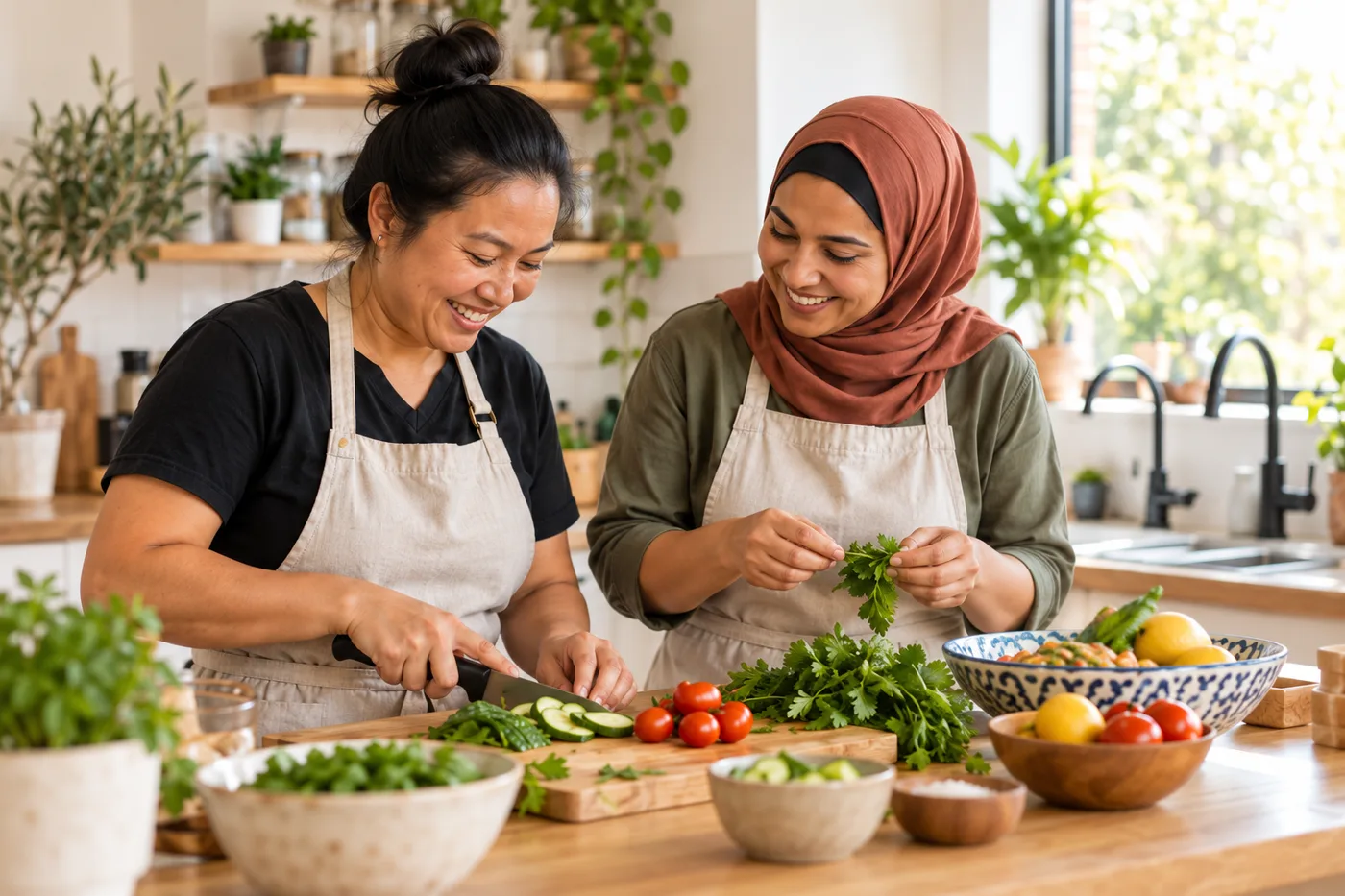
LOCAL SKILLS. REAL POTENTIAL.
For experienced cooks and people taking their first business steps. We welcome people from all backgrounds, including those facing barriers to employment.
Explore how your cooking skills could become a small food business.
Bring your experience to a way of working that fits your life.
Share your food traditions and build a business on your terms.
THE PHASE ONE PATHWAY
We’re developing a program that connects business planning, council preparation and ongoing mentoring. We are seeking funding to deliver the full program.
See the full programDevelop your idea, business plan and financial forecasts with guidance.
Understand council applications, food safety and suitable training.
Plan pricing, cash flow, records and manageable day-to-day operations.
Review progress and work through business decisions with ongoing mentoring.
FOOD BUSINESS BASICS
Your council confirms the classification and requirements for your food activities.
A starting point, not an assessment. Class 1 and other requirements may also be relevant.
Explore food safety guidanceCARE GOES INTO EVERY STEP
Food safety is part of preparing to trade, whatever the size of your kitchen.
Read the guidance ↗Your activities determine the training and food safety arrangements you need. Ask your council which requirements apply, including any food safety supervisor and recordkeeping obligations.
FSANZ: food safety management toolsKnow your ingredients, manage cross-contact and provide accurate allergen information. Packaging and the way you sell influence the labelling requirements.
FSANZ: allergen labellingConsider your business structure, records and insurance needs. Discuss public and product liability, home-business exclusions and delivery activities with a suitable insurer or adviser.
business.gov.au: business insuranceCheck food premises and planning requirements early, before investing in equipment or renovations. Delivery and home collection arrangements also need to suit your premises and local rules.
Business Victoria: home-based business requirementsA SUSTAINABLE WAY TO WORK
Plan manageable quantities, pre-orders and a pace you can sustain. Include your time in your pricing and leave room for life outside the kitchen.
Consider deliveries, storage, waste and customer traffic alongside council requirements. Delivery-first is a preference, not a substitute for approvals.
We welcome conversations with councils, community organisations and potential supporters.
Talk to usTHE KITCHEN NOTEBOOK
Business planning · 4 min read
Before you invest in your food business, understand the customers, costs and sales it needs to work. A business plan and financial forecasts help you make that decision.
Updated 17 October 2026
Read the guide ↗First check the food and planning requirements for your premises and activities with your council. A home kitchen is not automatically approved for commercial food preparation.
We’re developing Phase One. Dates, fees and delivery arrangements are not yet confirmed. An expression of interest helps us understand who wants to be involved.
Phase One focuses on preparing micro food businesses. Phase Two is planned to include an online marketplace to help program participants promote and sell their products to their local communities.
EXPRESS YOUR INTEREST
Tell us about your food business idea, a partnership or a referral.
An enquiry starts a conversation. Program places and delivery arrangements are subject to confirmation.